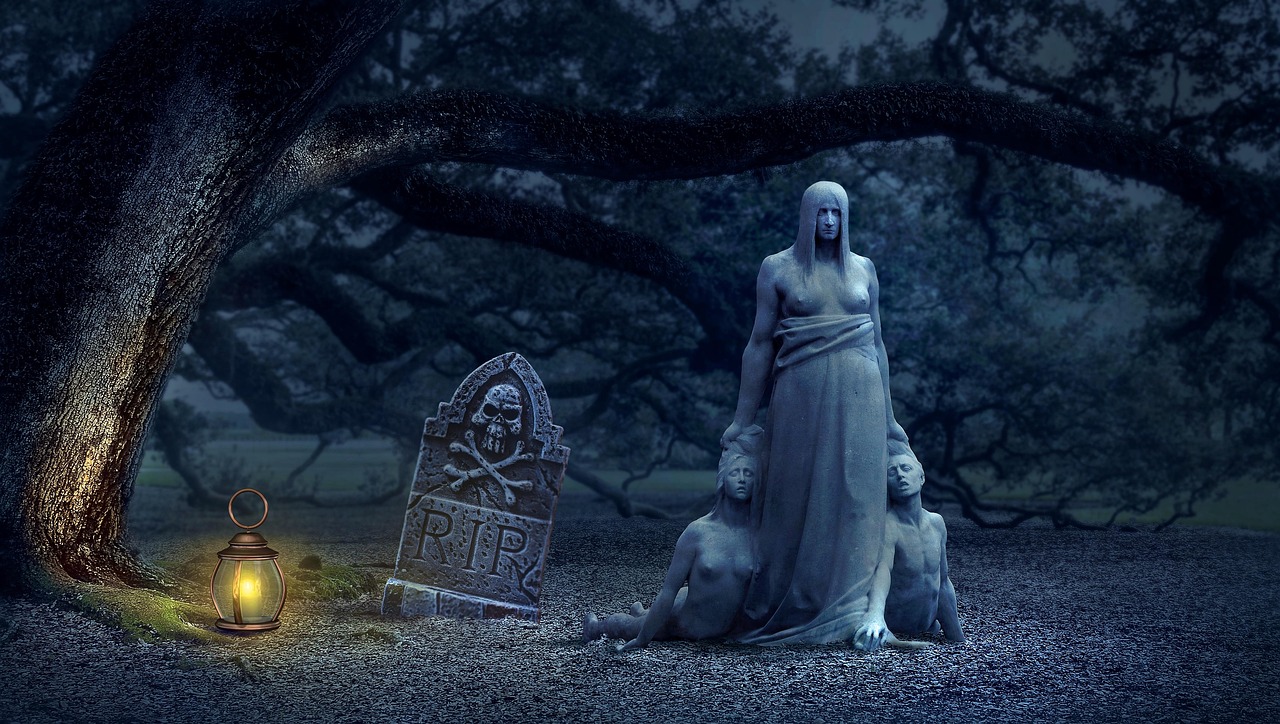
Residual Haunting: Echoes of the Past
Residual hauntings, a fascinating and often debated phenomenon within parapsychology, present a unique type of spectral activity distinct from intelligent hauntings, apparitions, or poltergeist phenomena. These hauntings are theorized to be recordings, impressions, or echoes of past events, playing out repetitively in a specific location. Unlike intelligent hauntings, where a spirit exhibits awareness and interacts with the living, residual hauntings are thought to lack consciousness or intent. They are akin to a ghostly video loop, playing out the same scene or sequence of events over and over again. Understanding the nuances of residual hauntings requires delving into the theories surrounding their formation, the characteristics that distinguish them, and the methods used to investigate and potentially document them.
Theories of Formation: Imprinting on Space and Time
Several theories attempt to explain the formation of residual hauntings. The most prominent involves the concept of “stone tape theory.” Coined by British researcher Thomas Charles Lethbridge, the stone tape theory posits that the physical environment, particularly materials like stone, brick, or even wood, can somehow absorb and retain energy from traumatic or emotionally charged events. This energy, imprinted upon the fabric of the location, can then be replayed under certain conditions, creating the impression of a ghostly re-enactment. The “tape” is the environment, and the “recording” is the energy of the event.
Another, related, theory suggests that intense emotional energy, generated during moments of extreme trauma, violence, or passionate activity, can imprint upon the spacetime continuum. This imprinting creates a localized distortion, causing the event to replay or echo periodically. This theory emphasizes the role of human emotion as the catalyst for the creation of a residual haunting. Factors such as high levels of stress, grief, or fear may contribute to the intensity and permanence of the imprint.
Yet another perspective links residual hauntings to the quantum realm. This theory suggests that certain events, particularly those involving significant energy shifts, can create quantum entanglement between the event and the location. This entanglement allows the event to be replayed as a probabilistic outcome, triggered by specific environmental conditions or observers. While highly speculative, this theory attempts to explain the phenomenon using principles of quantum physics.
Distinguishing Features: A Lack of Interaction and Predictability
Distinguishing residual hauntings from other types of paranormal activity is crucial for effective investigation. One of the key characteristics is the complete lack of interaction. Witnesses observing a residual haunting typically report seeing or hearing something occurring as if they are observing a scene from the past. The ghostly figures or sounds do not acknowledge the presence of observers, nor do they react to any attempts at communication. They follow a pre-determined script, regardless of external stimuli.
Another distinguishing feature is predictability. Residual hauntings often occur at the same time of day, on specific dates, or under particular environmental conditions, such as certain weather patterns or levels of ambient light. This predictability contrasts sharply with intelligent hauntings, which tend to be more unpredictable and responsive to their environment. The events of a residual haunting are fixed, unchangeable, and repetitive, whereas intelligent hauntings display variable behavior and apparent awareness.
Furthermore, residual hauntings rarely exhibit any personal relevance to the observer. Unlike intelligent hauntings, which may involve personal messages, feelings of connection, or attempts at communication directed towards specific individuals, residual hauntings are impersonal and detached. They are a dispassionate replay of a past event, observed as an outsider rather than experienced as a participant. This lack of personal connection is a significant indicator of a residual haunting.
Investigative Techniques: Documentation and Analysis
Investigating a potential residual haunting requires a meticulous and systematic approach. The first step involves gathering historical data about the location. This includes researching past events, historical records, and any accounts of previous paranormal activity. Understanding the history of the site can provide valuable context and potentially identify traumatic or emotionally charged events that may have contributed to the formation of a residual haunting.
Next, detailed interviews with witnesses are essential. These interviews should focus on documenting specific observations, including the time of day, date, environmental conditions, and the exact sequence of events witnessed. Investigators should pay close attention to patterns and inconsistencies in the witness accounts, looking for common threads that may point to a recurring phenomenon. It is important to document the emotional state of witnesses both before and after the sighting.
Environmental monitoring is another crucial aspect of the investigation. This involves recording temperature fluctuations, electromagnetic field (EMF) readings, and changes in ambient light levels. While these measurements are not definitive proof of a residual haunting, they can help identify correlations between environmental conditions and the occurrence of paranormal activity. Anomalous readings, such as sudden temperature drops or spikes in EMF levels, may coincide with reported sightings.
Audio and video recording equipment can be used to attempt to capture evidence of the suspected haunting. Setting up cameras and microphones in areas where the activity has been reported can potentially document the events as they unfold. While it is rare to capture clear visual evidence of a residual haunting, audio recordings may sometimes reveal unexplained sounds or voices that correlate with the witnessed events. It is important to note that any captured evidence must be carefully analyzed and verified to rule out other possible explanations.
Challenges and Skepticism: Ruling Out Natural Explanations
Investigating residual hauntings presents numerous challenges. One of the most significant is the difficulty in distinguishing them from other types of paranormal activity. The lack of interaction and the repetitive nature of the phenomenon can make it difficult to confirm whether the observed activity is truly a residual haunting or simply the result of misinterpretation or suggestion.
Skepticism is another major hurdle. Many skeptics argue that reported residual hauntings can be attributed to psychological factors, such as pareidolia (seeing patterns in random stimuli), suggestibility, or confirmation bias. They also point to natural phenomena, such as infrasound (low-frequency sound waves), which can create feelings of unease or anxiety, as potential explanations for reported paranormal experiences.
To address these challenges, investigators must meticulously rule out all possible natural explanations before concluding that a residual haunting is present. This includes thoroughly investigating the environment for potential sources of infrasound, carefully evaluating witness testimonies for signs of suggestibility or bias, and conducting rigorous statistical analysis of any recorded data. Only by systematically eliminating alternative explanations can investigators make a credible case for the existence of a residual haunting.
Ethical Considerations: Respect and Privacy
Investigating potential hauntings, especially those involving residual phenomena, requires careful consideration of ethical issues. Respect for the property owner and their beliefs is paramount. Investigators should obtain explicit permission before conducting any investigation on private property and should be mindful of the impact their presence may have on the residents.
Protecting the privacy of individuals involved in the haunting is also crucial. Witness testimonies should be anonymized to prevent potential embarrassment or harassment. Sensitive information about the history of the location should be handled with discretion and only shared with those who have a legitimate need to know.
Furthermore, investigators should avoid making definitive claims about the existence of a haunting, especially in the absence of conclusive evidence. Instead, they should present their findings in a balanced and objective manner, acknowledging the limitations of the investigation and the possibility of alternative explanations. Responsible paranormal investigation prioritizes ethical conduct and respects the rights and beliefs of all parties involved.
The exploration of residual hauntings remains a complex and fascinating endeavor, inviting continuous research and debate. By understanding the proposed theories, characteristics, and investigative techniques, researchers can continue to refine our understanding of these enigmatic echoes of the past.