Ancient Roots: From Burial Grounds to Ghost Stories
The concept of haunted houses didn’t materialize overnight; it evolved over centuries, intertwined with humanity’s enduring fascination with death, the afterlife, and the unexplained. Its origins can be traced back to ancient civilizations, where burial grounds and places associated with death were often viewed as potential hotspots for paranormal activity.
In ancient Egypt, tombs of pharaohs were elaborately decorated and filled with riches intended for the afterlife. Fears of disturbing the dead, coupled with intricate traps and curses inscribed on tomb walls, fostered an atmosphere of unease and the belief in restless spirits guarding their treasures. These tombs weren’t explicitly “haunted houses” in the modern sense, but they served as precursors, establishing the idea of specific locations being tied to the spirits of the deceased.
Similarly, in ancient Greece and Rome, burial grounds and sites of violent death were avoided and sometimes even feared. The Romans, in particular, had elaborate rituals for placating spirits and preventing them from haunting the living. They believed in various types of ghosts, some benevolent and others malevolent, capable of influencing the world of the living. Roman literature frequently features tales of haunted locations, often private homes where tragedies had occurred. The philosopher Pliny the Younger, in his letters, recounts a story of a haunted house in Athens plagued by a rattling ghost, demonstrating that even in supposedly enlightened times, the belief in restless spirits was widespread.
These early examples establish a crucial foundation: the association of specific locations, particularly those connected to death and tragedy, with the potential for supernatural phenomena. This link between place and the paranormal forms the bedrock upon which the concept of the haunted house would eventually be built.
The Rise of Gothic Literature and the Haunted Mansion Trope
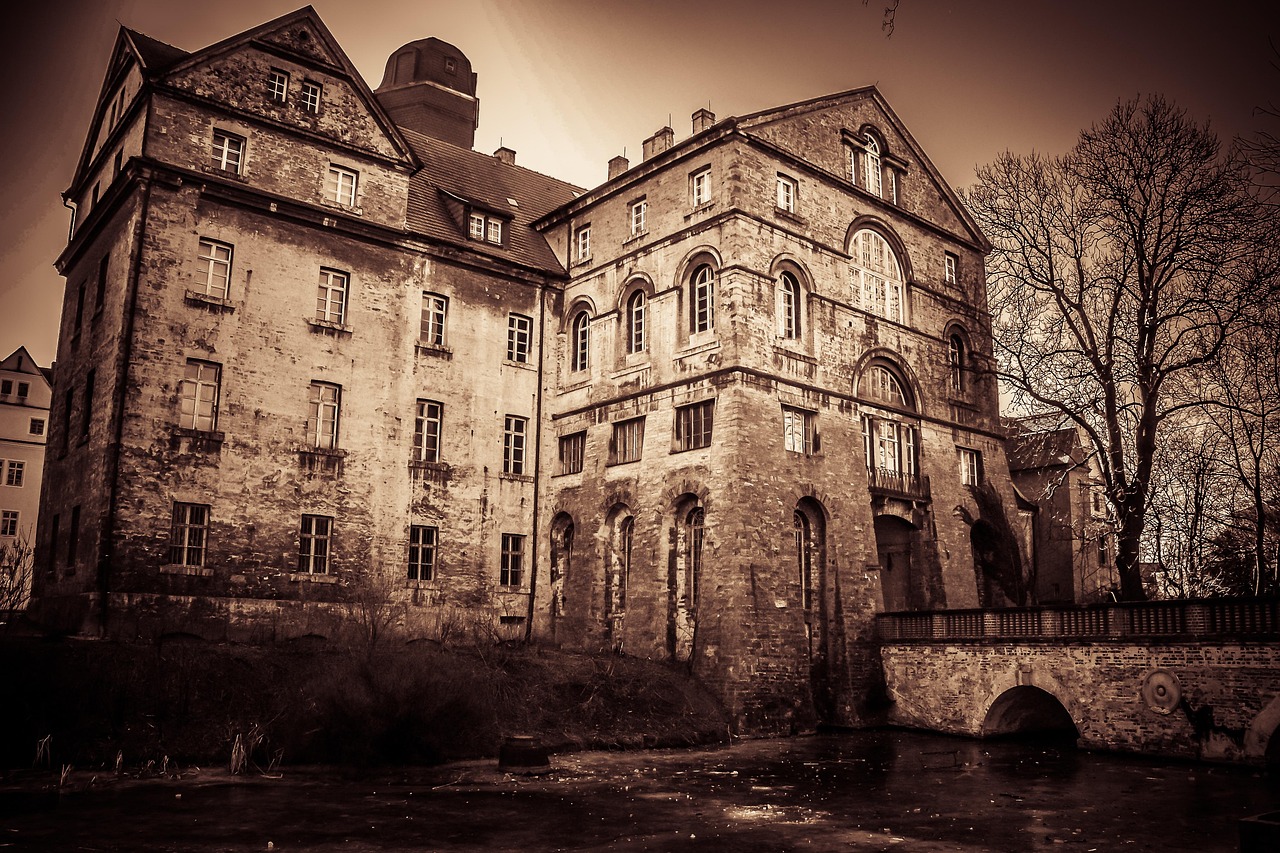
The 18th and 19th centuries witnessed the emergence of Gothic literature, a genre that played a pivotal role in shaping our modern understanding of haunted houses. Gothic novels, characterized by their emphasis on mystery, horror, and the supernatural, frequently featured decaying castles, crumbling mansions, and isolated estates as central settings. These locations, often burdened with dark histories and secrets, became synonymous with the presence of ghosts and other paranormal entities.
Horace Walpole’s “The Castle of Otranto” (1764), often considered the first Gothic novel, introduced many elements that would become staples of the genre, including a gloomy castle, hidden passages, and supernatural occurrences. Ann Radcliffe, another prominent Gothic writer, further popularized the haunted mansion trope with novels like “The Mysteries of Udolpho” (1794), which featured a remote and foreboding castle filled with unexplained sounds, eerie shadows, and a pervasive sense of dread.
These novels didn’t merely depict haunted houses; they established a set of conventions that would influence subsequent depictions for centuries. The physical characteristics of the haunted mansion – its age, its isolation, its disrepair – became symbolic of its troubled history and the presence of restless spirits. The narratives often revolved around uncovering the secrets hidden within the walls, revealing tales of past tragedies, injustices, and unresolved conflicts that fueled the haunting.
Furthermore, Gothic literature explored the psychological impact of haunted environments. Characters were often portrayed as being driven to madness by the oppressive atmosphere and the constant threat of the supernatural. This psychological element added another layer of depth to the haunted house narrative, exploring the ways in which fear and paranoia can distort reality and unravel the human mind.
Victorian Spiritualism and the Popularization of Ghost Hunting
The Victorian era (1837-1901) was a period of significant social and cultural change, marked by rapid industrialization, scientific advancements, and a growing interest in the occult. This era also witnessed the rise of Spiritualism, a religious movement that centered on the belief in communication with the spirits of the dead. Spiritualism provided a framework for understanding and interacting with the paranormal, which in turn fueled the popularization of ghost hunting and the investigation of haunted houses.
Seances, conducted in darkened rooms and often involving mediums who claimed to channel spirits, became a popular form of entertainment and a way to connect with deceased loved ones. The Victorian fascination with death, coupled with the belief in the possibility of communicating with the dead, created a fertile ground for the growth of ghost stories and the investigation of allegedly haunted locations.
Individuals and groups dedicated to investigating paranormal phenomena began to emerge. Organizations like the Society for Psychical Research, founded in London in 1882, aimed to scientifically study psychic phenomena, including hauntings and apparitions. These early ghost hunters employed methods such as collecting eyewitness accounts, documenting unexplained phenomena, and attempting to establish a scientific basis for the existence of ghosts.
The Victorian era also saw the publication of numerous books and articles documenting alleged hauntings. These accounts, often sensationalized and embellished, further fueled public interest in the paranormal and contributed to the growing perception of certain houses as being inherently haunted. The rise of Spiritualism and the popularization of ghost hunting helped to transform the haunted house from a literary trope into a cultural phenomenon.
20th Century Media and the Modern Haunted House Experience
The 20th century brought about a revolution in media and entertainment, which profoundly impacted the way haunted houses were perceived and experienced. Film, television, and later video games transformed the haunted house from a static literary setting into a dynamic and immersive environment.
Early horror films, such as “Nosferatu” (1922) and “The Cat and the Canary” (1927), utilized visual effects and atmospheric settings to create a sense of dread and suspense. These films established a visual vocabulary for the haunted house, drawing inspiration from Gothic literature and adding new elements such as flickering lights, creaking doors, and ghostly apparitions.
Later films, such as “The Haunting” (1963) and “The Amityville Horror” (1979), further refined the haunted house genre, exploring the psychological impact of paranormal activity on the inhabitants. These films often depicted families being driven to madness or destruction by the malevolent forces within the house.
Television shows, such as “The Twilight Zone” and “Dark Shadows,” also contributed to the popularization of haunted house stories, often presenting them in a more accessible and episodic format. The advent of reality television led to shows like “Ghost Hunters,” which purported to document real-life paranormal investigations, further blurring the lines between fiction and reality.
Video games took the haunted house experience to a new level of immersion, allowing players to explore virtual environments and interact with supernatural entities. Games like “Resident Evil” and “Silent Hill” utilized jump scares, psychological horror, and intricate narratives to create terrifying and unforgettable experiences.
The proliferation of haunted house attractions, particularly around Halloween, provided another avenue for experiencing the thrill of fear and the unknown. These attractions, ranging from amateur home haunts to professionally designed scare parks, offer a simulated experience of being in a haunted environment, often incorporating actors, special effects, and elaborate sets.
The Science vs. Superstition Debate: Explaining the Unexplained
Despite the enduring popularity of haunted houses, the scientific community remains largely skeptical of the existence of ghosts and other paranormal phenomena. While many people believe in the supernatural based on personal experiences or anecdotal evidence, scientists typically require empirical data and rigorous testing to support such claims.
Several scientific explanations have been proposed to account for phenomena often attributed to hauntings. One common explanation is the presence of infrasound, low-frequency sound waves that are below the range of human hearing. Infrasound can be produced by various sources, such as wind, machinery, or geological activity. Exposure to infrasound can cause feelings of unease, anxiety, and even hallucinations, which might be misinterpreted as paranormal activity.
Another potential explanation is the presence of electromagnetic fields (EMF). High levels of EMFs can be generated by electrical wiring, appliances, and other electronic devices. Some studies have suggested that exposure to EMFs can affect brain function and create sensory distortions, leading to feelings of being watched or sensing a presence.
Carbon monoxide poisoning can also cause symptoms similar to those reported in haunted houses, including headaches, dizziness, nausea, and hallucinations. Leaks from faulty furnaces or other appliances can release carbon monoxide into the air, creating a potentially dangerous environment that may be mistaken for a haunting.
Furthermore, psychological factors can play a significant role in shaping our perception of haunted houses. Suggestibility, expectation, and confirmation bias can all influence how we interpret ambiguous stimuli and contribute to the belief that a location is haunted.
However, it’s important to acknowledge that not all unexplained phenomena can be easily dismissed. Some cases remain unresolved, and the debate between science and superstition continues. The enduring appeal of haunted houses lies in their ability to tap into our deepest fears and anxieties, regardless of whether we believe in ghosts or not. The mystery and the unknown are powerful attractors, ensuring that the allure of the haunted house will persist for generations to come.